


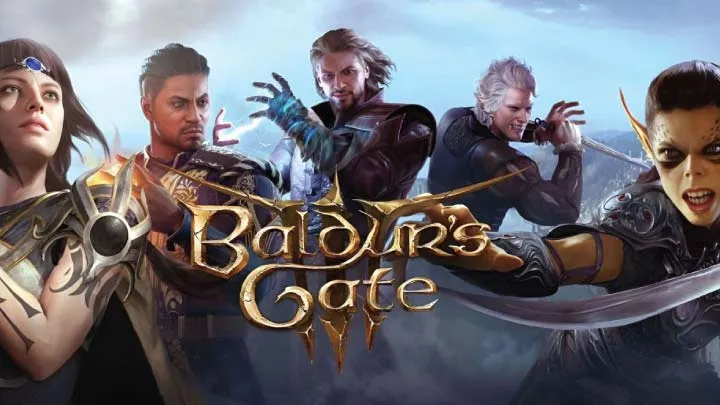
The monumental success of Baldur’s Gate 3 is often attributed to its unparalleled reactivity and the density of its choices. Larian Studios managed to translate the chaotic freedom of a tabletop Dungeons & Dragons session into a digital format better than any developer in history. However, beneath the surface of its branching narratives lies a profound and complex issue: The Erosion of Narrative Cohesion in Act 3. While the first two acts of the game provide a tightly paced, escalating sense of dread and focus, the arrival at the titular city introduces a structural fragmentation that threatens the game's emotional payoff.
This article examines the mechanical and narrative friction of the final act, exploring how the transition from a linear journey to an open-world urban sprawl impacts character arcs, quest resolution, and the player’s sense of urgency in a world that is supposedly ending.
The Shadow-Cursed Transition: A Contrast in Design
To understand the specific issues inherent in the game’s final act, one must first look at the design philosophy of Act 2. The Shadow-Cursed Lands are defined by a singular, oppressive goal: reach Moonrise Towers and confront Ketheric Thorm. Every side quest, from the Gauntlet of Shar to the healing of the land, feeds directly into this central conflict. This creates a "bottleneck" design that ensures players are emotionally and mechanically prepared for the high-stakes finale of the mid-game.
When the player finally crosses the threshold into Act 3, this focused design is discarded in favor of an overwhelming urban sandbox. Suddenly, the apocalyptic threat of the Absolute and the ticking clock of the Mind Flayer tadpoles are forced to compete with dozens of disparate errands, from investigating suspicious toys to solving murders in a local temple. This transition creates a sudden "narrative whiplash," where the urgency established at Moonrise Towers is sacrificed at the altar of open-world exploration.
The Illusion of Urgency vs. The Sandbox Reality
In Baldur’s Gate 3, the primary antagonist is time—or at least, the narrative tells us it is. From the opening cinematic, the threat of ceremorphosis is presented as an immediate, life-ending crisis. Act 3 exacerbates this by placing an Elder Brain directly beneath the city. However, the gameplay mechanics of the city encourage the player to spend dozens of hours engaging in low-stakes side content. This creates a profound sense of "ludonarrative dissonance," where the characters speak of impending doom while the player spends three days looking for a missing circus clown.
The tension of the "ticking clock" becomes an empty threat, which undermines the gravitas of the final confrontation. The player is forced to manually reconcile the fact that Orin the Red has kidnapped a companion but is apparently willing to wait weeks for the player to finish a maritime inventory check before she takes action. This lack of a mechanical timer in a narratively urgent situation bleeds the tension out of the story’s conclusion.
The Fragmented Resolution of Companion Arcs
Act 3 is intended to be the "Resolution Phase" for the game's core companions. Each character—Astarion, Shadowheart, Gale, Lae'zel, Wyll, and Karlach—has a major climax located within the city walls. While these individual moments are often the highlights of the game’s writing, their placement within the city is highly fragmented. Because the player can approach the city in almost any order, the emotional build-up for these climaxes can feel disjointed or triggered prematurely.
Shadowheart’s conclusion in the House of Grief is a masterclass in emotional payoff, but it often exists in a vacuum. Once the quest is completed, the monumental shift in her character often fails to radiate outward into the rest of the game’s world. The companion reactivity that made Act 1 feel so alive begins to thin out. Players often find that after a massive character revelation, the companion returns to the camp with only a few new lines of dialogue, making the resolution feel like a checked box on a list rather than a transformative life event.
Key Companion Climax Locations:
- The Szarr Palace: Astarion’s confrontation with his creator, Cazador.
- The House of Grief: The final choice for Shadowheart regarding her faith and family.
- The Iron Throne: The high-stakes rescue for Wyll’s pact and the Gondians.
- The House of Hope: A high-level dungeon involving Raphael and Gale’s ultimate ambition.
The Gortash and Orin Dilemma: Divided Antagonism
One of the most significant structural issues in the final act is the split focus between the two remaining Chosen: Enver Gortash and Orin the Red. While Ketheric Thorm served as a singular, looming threat in Act 2, Gortash and Orin often feel like they are competing for the player's attention in ways that dilute their menace. Orin, in particular, relies on a "kidnapping" mechanic that serves to annoy the player by removing a party member rather than raising the stakes through clever storytelling.
Gortash, despite being a political mastermind, is often relegated to standing in a single room at Wyrm’s Rock, waiting for the player to dismantle his Steel Watch. The lack of dynamic movement from these villains makes the city feel less like a living battlefield and more like a static museum of boss encounters. The "deal" offered by Gortash is a fascinating narrative branch, but the game struggles to make a "peaceful" path feel as rewarding as the violent one.
Performance Hurdles and the Urban Slump
Beyond the narrative structure, Act 3 suffers from a technical "Urban Slump." The sheer number of NPCs, scripts, and interactable objects in the Lower City puts a massive strain on the game engine. At launch, this resulted in significant frame-rate drops and "input lag" where NPCs would take several seconds to react to player actions. While patches have improved this, the technical weight of the city still affects the pacing of the game.
When the engine struggles, the player's immersion breaks. In a game so reliant on the "vibe" of its environment, having NPCs pop in or seeing textures fail to load during a dramatic speech by a villain undermines the work of the voice actors. This technical friction contributes to the feeling of Act 3 being "unfinished" compared to the polished experience of Act 1. It creates a subconscious desire in the player to rush through the city to reach the end.
The Complexity of Choice: The Iron Throne as a Microcosm
Despite the issues of fragmentation, Act 3 contains moments of genius that highlight what the game was trying to achieve. The "Iron Throne" underwater prison sequence is perhaps the best example of high-stakes mechanical design in the game. It forces the player to manage a strict turn limit, multiple rescue targets, and complex environmental hazards. It is a brilliant marriage of gameplay and narrative consequence.
However, the Iron Throne also illustrates the "web of dependencies" that makes Act 3 so fragile. Success or failure here impacts the Gondians, the Ravengard family, the Steel Watch, and Gortash’s final boss fight. Because everything is so interconnected, if the player completes these quests "out of order," the game's logic can occasionally stumble. Character dialogue might refer to people who are dead as if they are alive, showing the immense difficulty in trying to account for every player permutation.
Navigating the Lower City: The Loss of Verticality
Acts 1 and 2 made incredible use of vertical space, from the Underdark to the rafters of the Shattered Sanctum. In Act 3, the Lower City is a sprawling, flat expanse. While there are rooftops and basements, the sheer density of the streets makes navigation feel more like a chore than an adventure. The "Fast Travel" points become a necessity rather than a convenience, and the sense of discovery is replaced by a sense of navigation by waypoint.
The issue here is that the city feels "too big for its own good." By giving the player the entire Lower City at once, the sense of progression is flattened. Larian’s commitment to total freedom means the player often stumbles into the end of a questline before they’ve found the beginning, leading to confusion and a diminished sense of narrative satisfaction.
The Impact of Exploration Fatigue:
- Overwhelming Quest Logs: Players often have 20+ active quests in Act 3.
- Inventory Management: The volume of loot and quest items becomes difficult to organize.
- NPC Interaction Overload: The "background noise" makes it harder to identify significant characters.
The Emperor and the Orpheus Conflict
The central moral choice of the endgame revolves around the Emperor and Prince Orpheus. This conflict is the culmination of the game's themes of trust and survival. However, many players feel that the choice is presented too late and with too little nuance. The Emperor’s sudden pivot if you choose to free Orpheus can feel "forced," as if the game is mandating a final boss-level betrayal regardless of the relationship you’ve built over 100 hours.
This lack of a "middle ground" highlights the limitations of the game’s branching paths at the very end. After a journey defined by "finding a third way," being funneled into a binary choice that ignores your past favors feels like a regression to older, more rigid RPG tropes. It is a moment where the "Master DM" seems to lose patience with the player and demands a conclusion.
The Climax: A Linear Descent into Battle
Once the player finally moves past the open-world distractions of the city, the game shifts into a "Point of No Return." The final sequence—climbing toward the Netherbrain—is a series of linear combat encounters that feel surprisingly traditional compared to the rest of the game. The "Gather Your Allies" mechanic, while satisfying as a "curtain call," often results in a cluttered battlefield where AI-controlled allies take long turns that slow the pace of the final fight.
This linear finale is a necessary evil to provide a definitive ending, but it highlights the awkwardness of Act 3’s overall structure. You go from total freedom (The Lower City) to total restriction (The High Hall) with very little transition. The epic scale of the battle is impressive, but the mechanical exhaustion of the previous 40 hours in the city can make the final victory feel more like a relief than a triumph.
Conclusion: The Price of Ambition
Ultimately, the issues found in the final act of Baldur’s Gate 3 are not failures of talent, but the natural results of unprecedented ambition. Larian Studios attempted to do something that had never been done: create a fully reactive, high-fidelity urban environment where every choice from the previous 80 hours of gameplay could come home to roost. The structural fragmentation and the technical hurdles are the price paid for that level of complexity.
While Act 3 may lack the airtight focus of Act 2, it remains a staggering achievement. The individual moments of brilliance—the confrontation with Raphael, the redemption of Astarion, the sheer spectacle of the city itself—outweigh the systemic frustrations. Baldur’s Gate 3 is a masterpiece that stumbles at the finish line, but only because it was running a race that no other game was brave enough to enter.