




Introduction
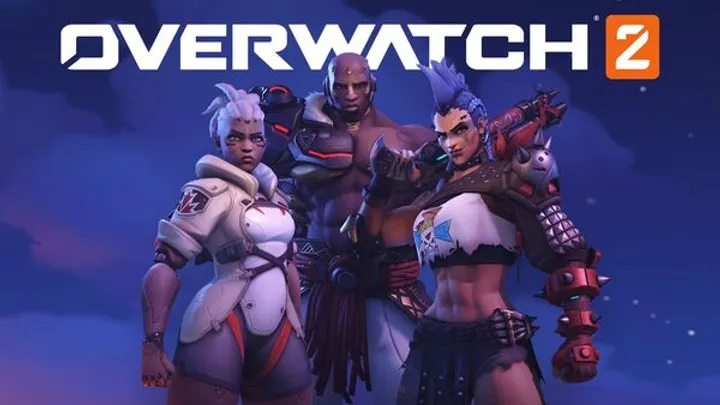
Overwatch 2 changed many things, but few changes reshaped the feel of the game as much as the move from two tanks to one. On paper, the decision was meant to speed up matches, reduce visual clutter, and make team fights easier to read. In practice, it created one of the most debated design problems in modern hero shooters: the solo tank is now expected to do the work that used to be shared by two players, while still surviving focus fire, creating space, leading engages, peeling for allies, and reacting to every mistake made by the rest of the team.
This article focuses on a specific issue inside Overwatch 2: the pressure and imbalance created by the single-tank format. Not the game as a whole, not every hero, and not balance in general, but the way one role became the center of almost every fight. That shift affected matchmaking, hero balance, player psychology, team communication, and the entire rhythm of competitive play.
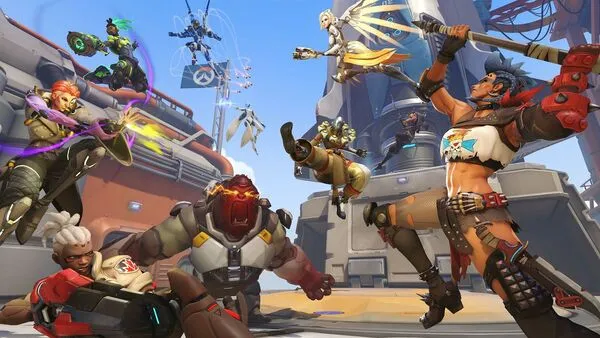
Before the Change: Why Two Tanks Once Hid the Problem
In the original Overwatch, tanking was a shared responsibility. One tank could create space while the other protected the backline, disrupted the enemy, or enabled a dive. Even when tank balance was messy, the two-tank structure gave the role more room to breathe. If one tank made a mistake, the other could sometimes cover it. If one tank was hard countered, the second could adapt the fight.
That old structure did not make tanks easy, but it made them relational. Their power came from combinations, and their weaknesses were softened by partnership. A Rein-Zarya line, an Orisa-Sigma bunker, or a Winston-D.Va dive could all spread responsibility across two players, which meant the role felt like a coordinated system rather than a single point of failure.
What the Second Tank Really Did
The second tank was not just “extra health.” It was a tactical buffer. It allowed aggression without immediate collapse. It also gave teams more options when the main tank needed to rotate, retreat, or trade cooldowns. In that environment, tanking was demanding but more forgiving.
Overwatch 2 removed that buffer, and once it was gone, every tank weakness became much more visible.
The Switch to 5v5 and the New Weight of Responsibility
When Overwatch 2 launched with 5v5, the game’s pace became faster and the battlefield more open. Fewer shields meant less stalling and more direct action. But removing a tank also removed an entire layer of risk distribution. The solo tank was no longer part of a frontline pair; they became the frontline.
That sounds dramatic because it is. In many matches, the tank is the first player the enemy tests, the first player allies depend on, and the first player blamed when something fails. The role became both more influential and more isolated. It could decide a fight more clearly than before, but it could also lose a fight more clearly than before.
The Hidden Tradeoff
The design tradeoff was not simply “less clutter for faster games.” It was “one player now absorbs a much larger share of team stability.” That change made fights easier to read, but it also made tank errors far more expensive.
When the solo tank dies, a team often collapses immediately. When the solo tank succeeds, the team can snowball. That binary outcome increases the emotional intensity of the role and makes every engagement feel heavier than it did in 6v6.
Space Creation Became a Personal Burden Instead of a Shared Task
In Overwatch 2, “making space” is no longer a job split between two frontliners. It falls almost entirely on one person. The tank must choose when to push, when to hold, and when to retreat, often while under constant pressure from cooldowns, crowd control, and damage bursts.
This means that space creation is now tied to personal judgment in a much harsher way. If the tank goes in too early, the team loses structure. If the tank goes in too late, the team loses momentum. If the tank hesitates, the fight stalls. If the tank overcommits, the team is punished instantly.
Why This Feels Different in Practice
In 6v6, one tank could play more defensively while the other engaged. In 5v5, the same player must often do both within a single fight. They are expected to read enemy resources, know when supports are able to save them, and still find a window to pressure the backline.
That is not just harder. It changes the mental load of the role. The solo tank must constantly decide whether the team needs a shield, a dive, a disruption tool, or a body on the objective. The role becomes less about fighting and more about managing a crisis.
Balance Patches Started Orbiting the Tank Role
Once Overwatch 2 settled into its 5v5 structure, balance changes increasingly revolved around tank survivability and tank agency. Buff one tank too much, and they dominate. Nerf another too hard, and they become a liability. Because there is only one tank slot, every change to the role affects the match more dramatically than changes to most damage or support heroes.
That makes tank balance unusually sensitive. A small buff can create a monster. A small nerf can make a hero feel unusable. This is not just a matter of numbers; it is a consequence of design structure. One tank can no longer hide in the shadow of another tank’s strengths.
Balance Becomes a Mirror
Whenever a tank becomes too good, players feel it immediately because there is no second frontliner to dilute their impact. Whenever a tank becomes too weak, the whole team feels vulnerable. This creates a balance loop where the role is either oppressive or fragile, with less room for subtlety.
The problem is not simply that tanks are strong or weak. The problem is that the game’s structure forces the tank role to carry too much meaning inside every single fight.
Queue Times Improved, But Tank Popularity Did Not Solve the Core Issue
One of the most cited reasons for the move to 5v5 was queue health. Fewer tanks meant fewer tank players needed per match, which should in theory reduce wait times and make matchmaking more manageable. The change did help the system in that narrow sense, but it did not fix the deeper issue of how tank players experience the game.
Shorter queues do not matter much if the role itself feels exhausting. Many players are willing to try tanking, but fewer are willing to keep doing it when every loss feels personal and every mistake becomes a teamwide disaster. That emotional cost is part of why the role still struggles with identity.
Why Players Burn Out
- They are focused first by the enemy team.
- They absorb blame when space is lost.
- They are expected to lead without always being supported.
- They must track the enemy and the team at the same time.
- They often feel punished for taking the very risks the role demands.
Queue health improved in one sense, but the tank experience became more intense rather than more sustainable.
Support and Damage Players Started Playing Around a Missing Half of the Frontline
Supports now need to protect one highly valuable frontliner who is constantly under pressure. Damage players now have fewer allied bodies to shield their angles or absorb enemy aggression.
This creates a different kind of team geometry. Flanks matter more. Rotations matter more. Mistakes are punished faster. But because there is only one tank, the rest of the team often plays more cautiously, waiting for the tank to take the first risk.
The New Team Habit
Many matches now revolve around a simple pattern: everyone waits for the tank to go first. If the tank engages, the team follows. If the tank hesitates, the team stalls. If the tank dies, the team retreats.
That would be manageable if the tank always had reliable follow-up. But in solo queue, coordination is inconsistent. So the tank is often forced to act like a shot caller, bodyguard, initiator, and pressure sponge all at once.
The Psychological Cost of Being the “Enabler” and the “Victim”
The solo tank often experiences a strange contradiction. The role is supposed to enable teammates, yet it is also the role most likely to feel abandoned. A tank may engage correctly and still lose because their team was not positioned to capitalize.
This makes tanking emotionally different from other roles. Damage players can often measure success in eliminations. Supports can measure it in healing, saves, or utility value. Tanks, however, are judged by outcomes that depend on everyone else’s behavior.
Why This Hurts Morale
The player is never just evaluating their own mechanics. They are evaluating whether the team understood the fight, whether the supports were ready, whether the damage players took angles, and whether the enemy was already set up for a counterplay.
When a role makes players feel responsible for everything and rewarded for nothing, burnout is not a surprise.
Hero Design Became a Search for Individual Survival Tools
Because one tank must survive so much pressure alone, tank hero design in Overwatch 2 increasingly favors self-sufficiency. Tanks need movement abilities, damage mitigation, self-healing, knockback, or burst resistance.
This pushes tank design away from team synergy and toward personal resilience. Instead of asking, “How does this tank work with another tank?” the game now asks, “How does this tank stay alive long enough to matter?”
Two Consequences of This Shift
- Tanks become less about protecting and more about occupying space.
- The strongest tanks are often those that can independently force space.
The result is that tanks can feel less like anchors and more like armored duelists.
Competitive Play Turned the Tank Into the Match’s Most Visible Fault Line
In ranked play, every role can make a difference, but the tank often becomes the visible fault line where the match is won or lost. If the tank wins the neutral fight, the team gains control of the map. If the tank is shut down early, the team often struggles to stabilize.
That visibility has a downside. Tanks are more likely to be criticized in chat and blamed for failed pushes, even when the real problem lies elsewhere.
What Players Commonly Misread
- They blame the tank without checking team positioning.
- They mistake poor timing for poor tank play.
- They ignore support cooldown mistakes.
- They expect the tank to solve every problem.
A role cannot thrive if players feel they are carrying blame more often than they are carrying games.
Why the Solo Tank Problem Is Really a Structure Problem
The debate around Overwatch 2’s tank role is often framed as a balance conversation, but the deeper issue is structural. The solo tank is carrying a design burden that is much larger than what one player can consistently manage.
That does not mean 5v5 is a failure. It means the format made a difficult role even more central, and the game has spent years trying to compensate through hero redesigns, health adjustments, and support utility changes.
What a Healthier Tank Experience Would Need
A healthier structure would need:
- Clearer expectations for tank players.
- Better support from teammates.
- Hero designs that reward initiative.
- Less punishment for small mistakes.
- More flexibility in team engagements.
Until that happens, the solo tank will remain both the most important and the most stressful role in Overwatch 2.
Conclusion
The solo tank problem in Overwatch 2 is not just a complaint from tank players. It is a design issue that affects every layer of the game. By removing a second tank, Blizzard simplified the battlefield, sped up fights, and sharpened the game’s pace. But that same decision also concentrated too much responsibility in one role, making tanks more visible, more vulnerable, and more emotionally demanding than before.
In the end, the issue is not that tanks are weak or overpowered in every patch. The issue is that the format asks one player to be the foundation, the initiator, the shield, the pressure valve, and the scapegoat. That is a lot to ask from any role in any game. Overwatch 2 remains exciting because of how decisive its fights can be, but the solo tank remains proof that clarity and comfort are not always the same thing.