The Unseen Enemy of Kairos: A Deep Dive into the Borderlands 4 PC Performance Crisis
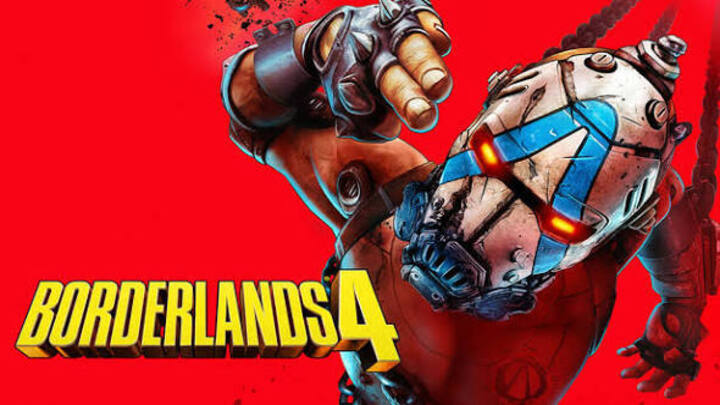
The release of the highly anticipated looter shooter brought a new era of vault hunting to fans worldwide. Transporting players away from the familiar dust of Pandora, the narrative thrusts us into the vibrant, war-torn landscapes of the planet Kairos, a world subjugated by the tyrannical dictator known as the Timekeeper. With an overhauled movement system, deeply customizable weaponry, and a fresh roster of diverse characters, the title promised to be the ultimate evolution of the beloved franchise. However, beneath the polished marketing and the thrilling mechanical additions, a dark shadow loomed over the PC gaming community. While console players enjoyed a relatively seamless revolution against the Order, PC enthusiasts found themselves fighting a far more insidious and frustrating enemy: catastrophic performance issues, severe optimization failures, and an engine that seemed to actively resist the hardware attempting to run it. This deep dive explores the multifaceted technical crisis that defined the launch on personal computers, examining how the implementation of Unreal Engine 5, an over-reliance on artificial upscaling, and questionable developer responses created a perfect storm of technical disappointment.
The Anticipation and Engine Promises
The transition from previous generation technology to Unreal Engine 5 was marketed as a monumental leap forward for the franchise's visual identity. Developers promised a seamlessly connected world divided into four distinct regions, including the rolling hills of the Fadefields and the frigid peaks of the Terminus Range. The engine was supposed to handle massive draw distances, allowing players to gaze upon the Timekeeper's impenetrable fortress city, the Dominion, from miles away without sacrificing graphical fidelity. This leap was intended to make the cel-shaded, comic-book aesthetic pop with unprecedented dynamic lighting and geometric density.
Furthermore, the gameplay mechanics were fundamentally expanded to take advantage of this new technological foundation. The introduction of the Digirunner vehicles and massive mobility buffs such as gliding, double-jumping, and point grappling meant that players would be traversing these expansive environments at blistering speeds. The promise was that the engine could stream these high-resolution assets in real-time, matching the frantic, high-octane pace of combat that fans expected. The community was led to believe that their modern hardware would be fully utilized to deliver an incredibly smooth, visually breathtaking experience.
A New Era of Fidelity
Expectations were astronomically high regarding how the game would scale on premium computing hardware. The marketing materials suggested that those with top-tier rigs would experience a flawless integration of hyper-detailed textures and complex particle systems. Players anticipated that the visual return on investment for their expensive graphics cards and processors would be unmatched, setting a new standard for how cooperative looter shooters should look and feel in the modern gaming landscape.
The Launch Day Reality and Immediate Backlash
When launch day finally arrived, the excitement quickly dissolved into widespread frustration across the PC community. Almost immediately, forums and review platforms were flooded with complaints detailing an experience that was fundamentally broken for a significant portion of the player base. Instead of marveling at the beautifully rendered alien flora of Kairos, players were greeted with abrupt crashes, hard freezes, and a level of stuttering that rendered fast-paced firefights practically unplayable. The contrast between the critical praise for the gameplay design and the abysmal technical execution was stark and jarring.
The user review sentiment plummeted as the reality of the optimization issues became apparent. One highly awarded user review perfectly encapsulated the collective anger, stating their frustration with how modern-day games can no longer be bothered to be optimized, yet publishers still demand a seventy-dollar price tag. This sentiment echoed across social media, painting a picture of a release that was pushed out the door long before its technical foundation was solidified. The excitement of unlocking new Vault Hunters was entirely overshadowed by the inability to run the game smoothly.
Despite the introduction of compelling new characters like Rafa the Exo-Soldier and Vex the Siren, the technical hurdles prevented players from truly engaging with their unique mechanics. When triggering Vex's pseudo-magical abilities or summoning her familiar, the resulting explosion of particle effects would consistently tank the framerate. This immediate backlash was not a localized incident but a widespread rebellion against the current state of AAA PC game optimization, marking one of the most controversial launches of the year.
Hardware Demands Versus Visual Fidelity
One of the most perplexing aspects of the crisis was how the game performed on top-of-the-line enthusiast hardware. Players equipped with the most advanced graphics cards and processors on the market reported that they were struggling to maintain stable framerates unless they drastically compromised on visual quality. Reviewers and technical analysts noted that dropping the graphics settings to Medium was often the only way to achieve a consistent sixty frames per second, a baffling reality for users whose systems exceeded the recommended specifications.
The Cost of Rendering Kairos
The intricate details of the new planet simply demanded computing power in a way that seemed wildly inefficient. Whether it was rendering the cybernetic implants of the Timekeeper's synthetic followers or processing the complex physics of the overhauled loot system, the CPU overhead was staggering. The visual output, while undoubtedly attractive, did not seem to justify the immense hardware tax being levied on the player's system. The engine appeared to be rendering microscopic details that were entirely lost during the chaotic blur of standard gameplay.
The esteemed technical analysts at Digital Foundry provided a damning assessment of the situation. After testing the PC version on the absolute fastest gaming processor that money could buy, they still encountered severe and disruptive stutters. Their conclusion noted that the game seemed to be running significantly worse than usual, even by the already demanding standards of Unreal Engine 5 titles. This professional verification validated the community's complaints, proving that the issue was deeply rooted in the game's code rather than individual hardware deficiencies.
The Infamous Shader Compilation Stutter
At the very core of the performance disaster was the infamous shader compilation stutter, an issue that has plagued many recent PC releases but reached unprecedented severity here. Every time a new visual effect was introduced to the screen, whether it was a unique elemental explosion from a newly looted weapon or a previously unseen enemy animation, the game engine would pause to compile the necessary shaders. This resulted in violent, unpredictable micro-freezes that fundamentally shattered the illusion of the game world and frequently led to unfair player deaths during critical boss encounters.
The background processing for these shaders was equally agonizing for the user experience. Whenever a player dared to adjust their graphics settings in pursuit of better performance, they were punished with a mandatory shader recompilation sequence that could take up to fifteen minutes to complete. Players were advised to suffer through at least fifteen minutes of gameplay just to see if their new settings had made any tangible difference. This tedious, time-consuming loop turned the simple act of configuring the game into a grueling test of patience.
Breaking the Flow of Combat
In a game entirely predicated on fluid movement and rapid target acquisition, these stutters were catastrophic. The newly introduced mechanics, such as the ability to chain dashes into slides and follow up with a point grapple, require split-second timing and uninterrupted visual feedback. When the screen freezes for half a second right as an Order soldier fires a high-powered burst, the player loses all agency. The stuttering transformed an inherently fast-paced, rhythmic combat dance into a disjointed, frustrating slideshow that completely alienated the player base.
The Reliance on Upscaling and Frame Generation
Rather than doing the grueling work of fundamental engine optimization, the developers appeared to rely heavily on artificial upscaling technologies to bridge the performance gap. Technologies like Deep Learning Super Sampling and FidelityFX Super Resolution were no longer treated as optional enhancements for pushing extreme resolutions, but rather as absolute requirements just to make the game function at basic levels. Frame Generation was heavily cited by reviewers and players alike as a mandatory toggle if one hoped to achieve a playable state, effectively locking older hardware out of the ecosystem.
This over-reliance on artificial frames introduced its own set of problems, primarily concerning input latency and visual artifacts. While Frame Generation can successfully smooth out the visual presentation, it inherently adds a slight delay to the player's inputs. In a precision-based shooter where landing critical hits on erratic targets is essential for survival, this added latency made the gunplay feel sluggish and unresponsive. Furthermore, the chaotic particle effects characteristic of the franchise often confused the upscaling algorithms, resulting in smudged visuals and ghosting during intense action sequences.
The Upscaler Dependency Problem
The industry trend of utilizing AI upscalers as a crutch rather than a tool reached its zenith with this release. By building the performance target around the assumption that the player's graphics card will generate fake frames to compensate for poor base optimization, the studio alienated a massive portion of their audience. Gamers who preferred native rendering for its crispness and immediate responsiveness were left in the cold, forced to choose between a blurry, laggy experience or an unplayable, stuttering mess.
Gearboxs Initial Response and Minimization
The public relations strategy adopted by the development studio in the wake of the launch only served to exacerbate the community's fury. Instead of issuing a comprehensive apology and detailing a clear roadmap for technical improvements, the initial official statements attempted to downplay the severity of the crisis. Communications suggested that the performance issues were only affecting a very small percentage of users and claimed that many of the underlying bugs were already fixed. This defensive posture completely contradicted the lived reality of tens of thousands of active players.
This gaslighting effect profoundly damaged the trust between the developers and their most dedicated PC audience. When major technology outlets, high-profile content creators, and overwhelmingly negative Steam reviews are all universally documenting the exact same stuttering issues, minimizing the problem is a dangerous tactic. Players felt that their legitimate concerns were being dismissed as statistical anomalies, which only motivated the community to document and broadcast the technical failures with even greater intensity.
Public Relations Missteps
By framing the optimization disaster as a minor hiccup rather than a fundamental flaw in their utilization of the engine, the studio's management failed to read the room. In an era where consumer advocacy in gaming is at an all-time high, transparency is the only viable currency. The refusal to immediately own the technical debt of their product turned a frustrating situation into a bitter, hostile standoff between the consumers who funded the project and the executives attempting to protect its public image.
Community Workarounds and Configuration Tweaks
Unwilling to wait for official patches that might take weeks or months to arrive, the PC gaming community predictably took matters into their own hands. Forums and social media platforms became command centers for collective troubleshooting, with users digging deeply into system files, hidden engine variables, and graphics control panels to find makeshift solutions. It was a grassroots effort to manually force the heavily encrypted software into a playable state, showcasing the resilience and technical ingenuity of the player base.
One of the most prominent discoveries involved manually overriding the shader cache limitations set by the operating system. Players found that by going into their graphics control panel and forcibly increasing the shader cache size to a massive one hundred gigabytes, they could significantly alleviate some of the aggressive traversal stuttering. While this required a massive amount of solid-state storage space, it was a sacrifice many were willing to make just to be able to explore the Fadefields without their game freezing every few steps.
Essential Optimization Steps
A standardized checklist quickly emerged among the community, detailing the necessary rituals required before even launching the application.
First, users had to ensure every single hardware driver was updated to the absolute latest experimental version to bypass the engine's poor memory management.
Second, the manual expansion of the graphics cache was required within the system control panels.
Third, in-game settings specifically related to volumetric fog and shadow resolution had to be locked at Medium, regardless of the system's theoretical capabilities.
Fourth, players were forced to enable AI Frame Generation, accepting the input lag in exchange for baseline visual fluidity.
The Resolution Compromise and Executive Comments
The friction between the player base and the studio reached a boiling point following public comments made by the company's leadership. Addressing the widespread performance complaints, executives suggested that if players were not stubbornly clinging to a 4K display output and just wanted to have a fun time with high performance, they should consider dropping their resolution to 1440p. The official stance was that unless a user possessed an absolute beast of a video card, making that specific graphical trade-off was highly recommended.
Leadership further inflamed the situation by employing a highly controversial analogy. They compared trying to run the modern Unreal Engine 5 title on older hardware to trying to drive a monster truck using the motor of a leaf blower, arguing that the resulting disappointment was inevitable. They firmly stated that just as the title could not be expected to run on obsolete consoles from a decade ago, it could not magically perform on aging PC architecture due to wishful thinking.
The Disconnect Between Developer and Player
These remarks were widely perceived as incredibly out of touch, incredibly arrogant, and entirely dismissive of the actual data being presented by the community. The core of the frustration was not that players with ten-year-old computers were upset; it was that users with cutting-edge, three-thousand-dollar rigs were experiencing the exact same unoptimized bottlenecks. Telling a player who just invested in top-tier hardware that they need to compromise on resolution because the game is effectively a monster truck felt like a complete evasion of technical responsibility.
Patches Updates and the Long Road to Stability
In the weeks and months that followed the disastrous launch, the development team embarked on a grueling campaign of triage and repair. A series of massive, gigabyte-heavy optimization patches were rolled out in an attempt to rectify the crippling CPU overhead and plug the severe memory leaks. These updates focused heavily on restructuring how the game handled background asset streaming, slowly refining the way the environment loaded as players utilized their high-speed Digirunners to cross the vast expanses of the new planet.
The updates incrementally improved the dire situation, primarily by introducing vastly superior pre-compilation processes for the game's shaders. By forcing the engine to compile a larger majority of the necessary visual data during the initial loading screens, the unpredictable micro-stutters during actual gameplay were significantly reduced. Furthermore, the team managed to optimize how the complex algorithms governing loot generation and enemy artificial intelligence taxed the processor, allowing for smoother encounters against the Timekeeper's heavily armored Order forces.
A Gradual Recovery
While the software eventually reached a much more stable and acceptable state, the sheer amount of time required to achieve this baseline competency was heavily criticized. By the time the most egregious technical flaws were smoothed over, a massive portion of the early adopting audience had already abandoned their campaign to liberate Kairos. The long road to stability meant that the vibrant late-game content and the deeply intricate character build synergies were entirely missed by players whose patience had run out during the initial weeks of stuttering and crashes.
The Lasting Impact on the Franchise's Reputation
Looking past the technical disaster, the core design of the experience introduced some truly fantastic mechanical innovations. The new roster of Vault Hunters felt distinct and powerful, and the heavily overhauled weapon customization systems that allowed players to seamlessly combine parts from different manufacturers represented a brilliant evolution of the loot loop. The narrative direction, focusing on a centralized planetary conflict against a compelling dictator, provided a refreshing structural change. Yet, all of these triumphs were entirely overshadowed by the PC performance crisis.
The legacy of this launch serves as a severe cautionary tale for the entire gaming industry regarding the premature and unoptimized adoption of Unreal Engine 5. It decisively proved that pushing the boundaries of geometric density, dynamic global illumination, and incredibly detailed character models is entirely meaningless if the player cannot smoothly aim their weapon or traverse the environment. A video game is, above all else, an interactive medium, and when the interactivity is compromised by technical incompetence, the visual artistry is completely wasted.
Lessons for the Future
If the studio intends to maintain the loyalty of its vast PC audience for future expansions or sequels, foundational technical stability must be prioritized from the absolute beginning of development. The digital resistance on the planet Kairos may have ultimately been won by the dedicated players who stuck through the technical mud, but the battle for PC optimization left permanent scars on the community. The true lesson is that hardware requirements must reflect reality, and optimization is a mandatory pillar of game development, not a post-launch luxury.
Conclusion
The journey to the planet Kairos was meant to be a triumphant leap forward for one of the most recognizable franchises in the cooperative shooter genre. Instead, it became a grueling case study in the perils of modern game engine optimization and the dangerous over-reliance on artificial performance enhancements. While the underlying mechanical design, engaging new Vault Hunters, and addictive loot systems eventually shone through the technical darkness, the initial PC experience was deeply compromised by catastrophic stuttering and dismissive public relations. The title ultimately serves as a stark reminder that breathtaking visuals and complex mechanics are utterly dependent on a stable, highly optimized foundation that respects the hardware of the player.